| step | records | |
|---|---|---|
| 0 | Daily survey rows after dropping missing sympt... | 139421 |
| 1 | Participant-level records created from daily s... | 31630 |
| 2 | Rows after joining vaccination records | 37246 |
| 3 | Final analysis sample after removing invalid a... | 37233 |
Data Overview
Available datasets
The workspace includes several CSV files related to vaccination records and surveys:
covid_daily_survey.csvcovid_dose_history.csvcovid_enrollment.csvcovid_vaccination.csvcovid_vaccination_old_records.csvcovid_weekly_survey.csv
How the analysis data were prepared
The website does not analyze the CSV files separately. It first converts the daily survey into a participant-level table and then joins that table to the vaccination records using VSAFE_SYSTEM_ID.
- The daily survey file is cleaned to keep only
yes/nosymptom responses. - A participant-level
symptom_freevariable is created from the daily survey history. It equals 1 only when that participant has noyessymptom responses in the available daily rows. - The participant-level daily table is joined to
covid_vaccination.csvonVSAFE_SYSTEM_IDso age band, dose number, and current health state are available in one analysis table. - Rows with invalid age values or missing join fields are removed.
- For the main analysis, Fourth and Fifth doses are excluded because they are extremely sparse and would not give stable comparisons.
- Missing key fields are dropped rather than imputed.
Cleaning summary
Enrollment and vaccination trends
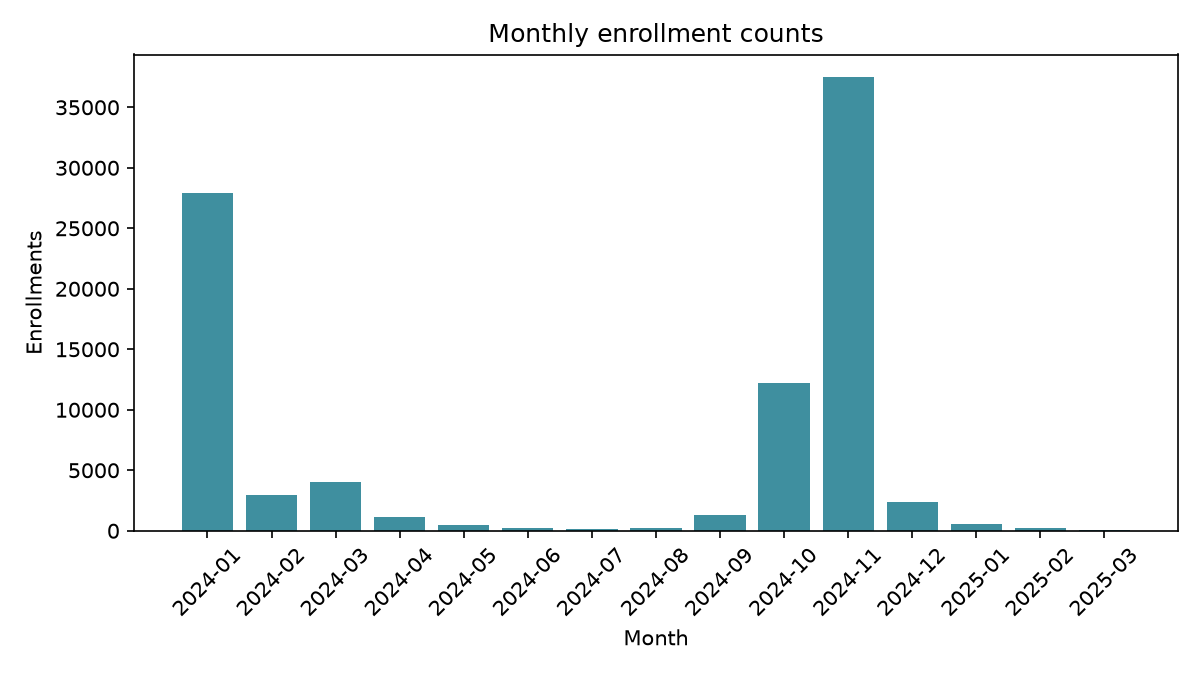
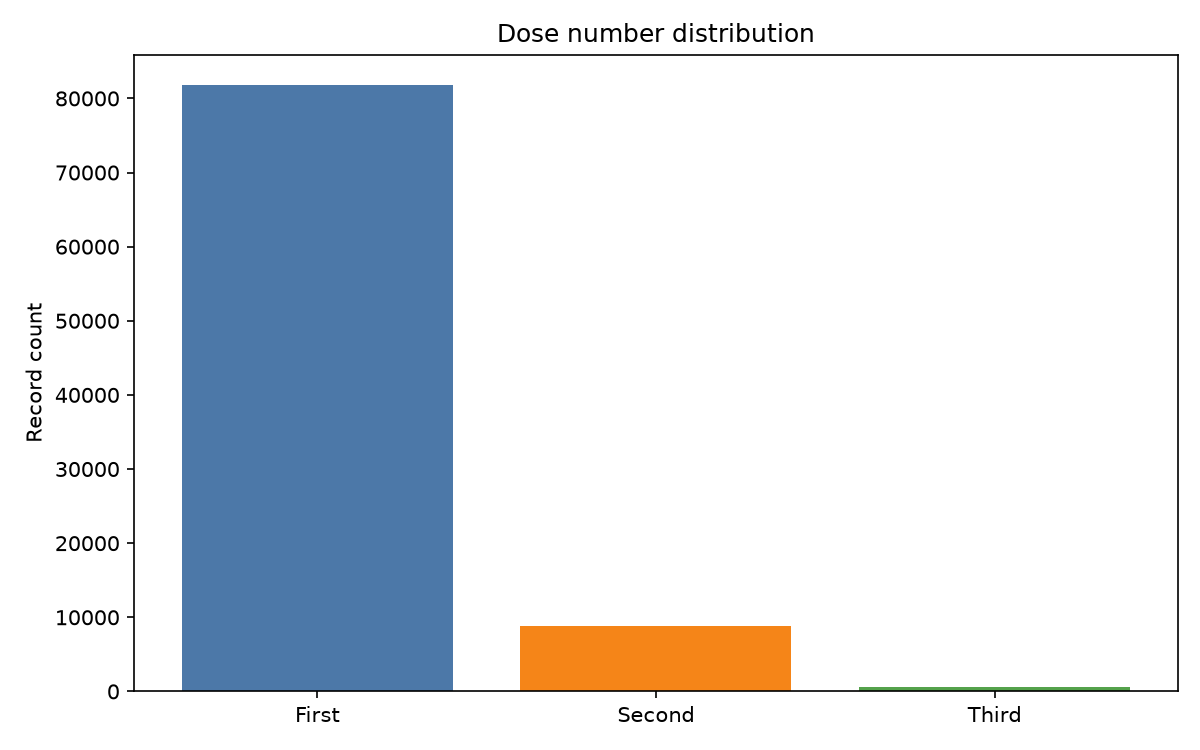
The data shows a sharp spike in enrollment during early 2024 and again toward late 2024, while most records are concentrated in first and second dose activity.
Enrollment trend chart
Dose distribution chart
Summary table
| Metric | Value |
|---|---|
| Enrollment records | 91,379 |
| Vaccination records | 91,216 |
| Daily survey responses | 139,421 |
| Weekly survey responses | 220,416 |
| Most common manufacturer | Pfizer-BioNTech |
| Most common dose | First |
Interpretation
- Enrollment activity is seasonally uneven, but the dataset is dominated by a small number of intense reporting periods.
- First-dose records account for most vaccination entries, suggesting a large share of the sample is still captured at the initial dose stage.
- The summary table gives a concise snapshot that can be expanded with more participant-level drilldowns later.